English
 Español
  Português
  русский
  Français
  日本語
日本語  Deutsch
  tiếng Việt
  Italiano
  Nederlands
  ภาษาไทย
  Polski
  한국어
한국어  Svenska
  magyar
  Malay
Malay  বাংলা ভাষার
  Dansk
Dansk  Suomi
Suomi  हिन्दी
  Pilipino
  Türkçe
  Gaeilge
  العربية
  Indonesia
  Norsk
Norsk  تمل
تمل  český
český  ελληνικά
  український
  Javanese
  فارسی
فارسی  தமிழ்
தமிழ்  తెలుగు
  नेपाली
  Burmese
  български
  ລາວ
ລາວ  Latine
  Қазақша
  Euskal
  Azərbaycan
  Slovenský jazyk
  Македонски
  Lietuvos
  Eesti Keel
  Română
  Slovenski
  मराठी
मराठी  Srpski језик

Call Us
+86-020-32636908
Email Us
lcx@igreenchem.com

Why Are Polymeric Mercaptans Critical in High-Performance Materials?
Polymeric mercaptans are a class of sulfur-containing compounds widely used as curing agents, chain transfer agents, and performance modifiers in advanced polymer systems. Their unique molecular structure enables controlled reactivity, improved mechanical strength, and enhanced chemical resistance in final products such as epoxy resins, coatings, adhesives, sealants, and elastomers. This article explores their chemical nature, industrial applications, benefits, challenges, and selection strategies. It also provides practical insights for manufacturers seeking stable curing performance and cost-effective formulation solutions in demanding industrial environments.

Table of Contents
- Introduction to Polymeric Mercaptans
- Chemical Structure and Reaction Mechanism
- Key Properties and Performance Advantages
- Industrial Applications
- Comparison with Other Curing Agents
- Selection Criteria for Industrial Use
- Challenges and Handling Considerations
- Performance Overview Table
- Frequently Asked Questions
- Conclusion and Industry Outlook
- Contact Information
Introduction to Polymeric Mercaptans
In modern polymer chemistry, achieving the perfect balance between curing speed, mechanical durability, and chemical resistance is a constant challenge. Polymeric mercaptans have emerged as a highly effective solution to address these demands. These materials contain multiple thiol (-SH) functional groups that actively participate in rapid addition reactions, particularly in epoxy curing systems.
Unlike traditional curing agents, polymeric mercaptans offer a unique combination of fast reaction kinetics and controlled molecular architecture. This allows manufacturers to fine-tune material properties for specific industrial applications such as coatings, adhesives, sealants, and elastomer systems.
Their importance continues to grow as industries demand faster production cycles, improved product durability, and environmentally responsible formulations.
Chemical Structure and Reaction Mechanism
Polymeric mercaptans are typically based on polyether or polyester backbones terminated or modified with thiol groups. These thiol groups are highly nucleophilic and readily react with epoxy groups through a step-growth polymerization mechanism.
The general reaction involves the opening of an epoxy ring by the thiol group, forming a stable thioether bond. This reaction is exothermic and can occur at room temperature, making polymeric mercaptans particularly valuable for fast-curing systems.
Key reaction characteristics include:
- Low activation energy for epoxy-thiol reactions
- Rapid curing at ambient temperatures
- High conversion efficiency
- Reduced need for external heat sources
These properties make them ideal for applications requiring quick handling strength and short production cycles.
Key Properties and Performance Advantages
Polymeric mercaptans offer a range of performance advantages that make them indispensable in high-performance material systems. Their molecular flexibility and sulfur chemistry contribute to both processing efficiency and end-use durability.
- Fast Cure Speed: Enables rapid production and reduced downtime.
- Low Temperature Curing: Effective even in ambient or low-temperature environments.
- Excellent Adhesion: Strong bonding to metals, plastics, and composites.
- High Flexibility: Reduces brittleness in cured materials.
- Chemical Resistance: Improved resistance to oils, solvents, and moisture.
These advantages make polymeric mercaptans especially valuable in industries where performance reliability is non-negotiable.
Industrial Applications of Polymeric Mercaptans
Polymeric mercaptans are widely used across multiple industrial sectors due to their adaptability and performance efficiency.
- Epoxy Adhesives: Fast-curing structural and industrial adhesives.
- Protective Coatings: Anti-corrosion coatings for marine and industrial environments.
- Sealants: Construction and automotive sealing systems.
- Electrical Encapsulation: Potting and insulation materials in electronics.
- Composite Materials: Reinforced plastics and structural composites.
In electronics, for example, polymeric mercaptans are highly valued for their ability to cure quickly without requiring high thermal input, which protects sensitive components.
Comparison with Other Curing Agents
To better understand the value of polymeric mercaptans, it is useful to compare them with other commonly used curing agents.
| Feature | Polymeric Mercaptans | Amines | Anhydrides |
|---|---|---|---|
| Cure Speed | Very fast | Moderate | Slow |
| Temperature Requirement | Low / Ambient | Ambient to moderate | High temperature |
| Flexibility | High | Moderate | Low to moderate |
| Odor | Distinct sulfur odor | Aminic odor | Low odor |
| Application Ease | Easy | Moderate | Complex |
This comparison highlights why polymeric mercaptans are often preferred in applications requiring rapid processing and flexible performance.
Selection Criteria for Industrial Use
Choosing the right polymeric mercaptan system depends on several critical factors. Engineers and formulators must evaluate both processing conditions and final performance requirements.
- Viscosity: Impacts mixing and application behavior.
- Functional Group Density: Determines curing speed and crosslink density.
- Molecular Weight: Affects flexibility and mechanical properties.
- Compatibility: Must match resin systems (epoxy types).
- Environmental Resistance: Required for end-use conditions.
A well-balanced formulation ensures optimal curing performance without compromising durability or processability.
Challenges and Handling Considerations
Despite their advantages, polymeric mercaptans present certain challenges that must be managed carefully in industrial environments.
- Odor Management: Sulfur-based compounds can produce strong odors.
- Storage Stability: Requires controlled conditions to prevent degradation.
- Mixing Precision: Improper ratios may affect curing performance.
- Material Sensitivity: Some formulations may be sensitive to moisture or impurities.
Proper handling procedures, ventilation systems, and quality control measures help mitigate these issues effectively.
Performance Overview Table
| Performance Factor | Impact of Polymeric Mercaptans |
|---|---|
| Cure Time | Significantly reduced, enabling fast production cycles |
| Mechanical Strength | High flexibility with strong adhesion |
| Thermal Stability | Moderate to high depending on formulation |
| Chemical Resistance | Excellent against oils and solvents |
| Processing Conditions | Suitable for ambient curing systems |
Frequently Asked Questions (FAQ)
What are polymeric mercaptans used for?
They are mainly used as curing agents in epoxy resins for adhesives, coatings, sealants, and composite materials.
Why are polymeric mercaptans preferred in fast-curing systems?
Because they react quickly with epoxy groups even at room temperature, significantly reducing production time.
Are polymeric mercaptans safe to handle?
They are safe when handled properly with adequate ventilation and protective equipment, although they may have a strong odor.
Can they be used in outdoor applications?
Yes, they provide good chemical resistance and flexibility, making them suitable for many outdoor environments.
What industries benefit most from polymeric mercaptans?
Construction, electronics, automotive, marine, and industrial manufacturing sectors widely use them.
Conclusion and Industry Outlook
Polymeric mercaptans continue to play a crucial role in modern polymer systems due to their unmatched curing speed, flexibility, and adaptability. As industries move toward faster production cycles and higher performance materials, their importance is expected to grow further.
Ongoing research focuses on improving odor control, enhancing thermal stability, and expanding compatibility with new resin systems. These developments will further strengthen their position in advanced material science applications.
Manufacturers that adopt optimized polymeric mercaptan systems can achieve better efficiency, improved product quality, and more reliable performance across diverse industrial environments.
Contact Information
For high-quality polymeric mercaptan solutions and customized material support, please reach out to Guangzhou Green New Materials Co., Ltd.. The company specializes in advanced chemical materials designed to meet demanding industrial requirements with consistent quality and performance.
If you are looking for technical support, formulation guidance, or bulk supply cooperation, feel free to contact us today to discuss your project needs and explore tailored solutions for your application.
Send Inquiry



X
We use cookies to offer you a better browsing experience, analyze site traffic and personalize content. By using this site, you agree to our use of cookies.
Privacy Policy
Applications
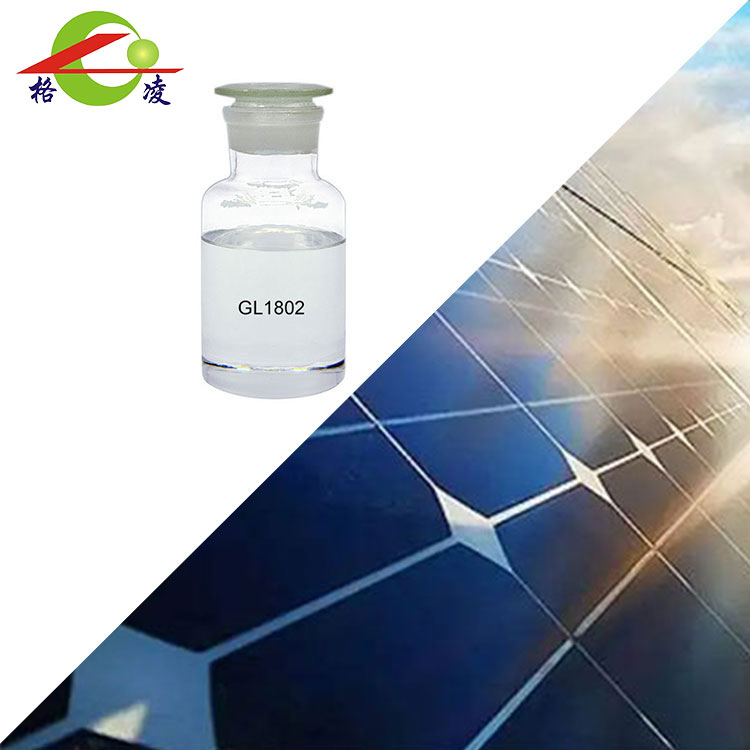 What are the advantages of Mercaptan Based Hardeners?2023/11/13
These hardeners help in the curing of epoxy resins and provide numerous benefits and advantages for industrial applications.